Product details
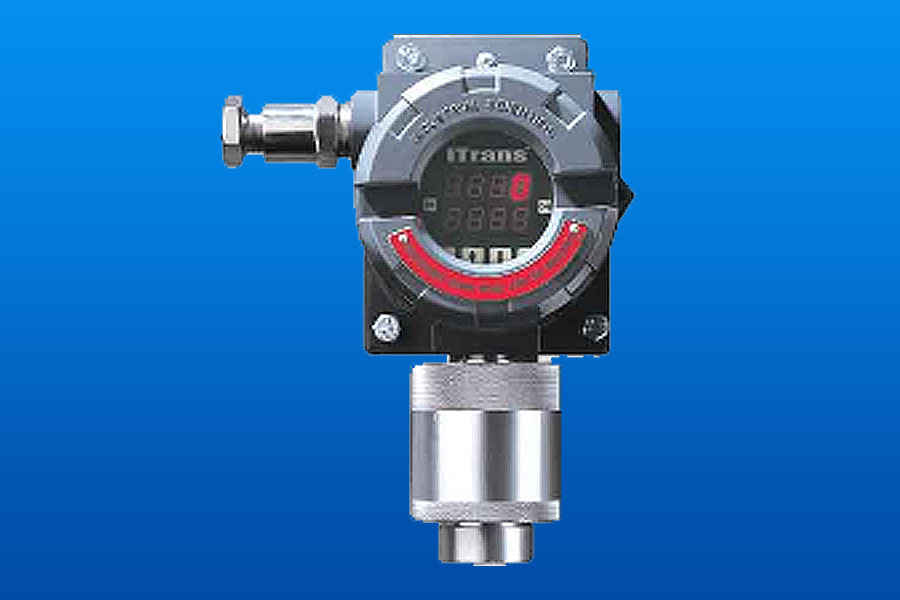
Introduction to the Honeywell i Trans Carbon Monoxide Detector in the United States:The i Trans monitor uses an intelligent electronic platform and provides single-point or dual-point detection from a single probe, achieving maximum flexibility, superior performance, and low-cost installation. Optional installed sensors include: HCl (hydrogen chloride), Cl2 (chlorine), ClO2 (chlorine dioxide), CO (carbon monoxide), CO/H2 Null (no carbon monoxide/hydrogen), H2S (hydrogen sulfide), HCN (hydrogen cyanide), NO2 (nitrogen dioxide), NH3 (ammonia), O2 (oxygen), PH3 (phosphine), SO2 (sulfur dioxide), LEL (lower explosive limit).
Measurement parameters:
Carbon monoxide CO 0-999ppm 1 ppm
Display: Dual-channel highlighted 4-digit LED (each channel has 7 segments) display
Working voltage: 12-28 VDC (normally 24 VDC)
Power consumption (maximum): Toxic gas / Oxygen: 150 mA, operating voltage 24 VDC (single gas)
Combustible gas (catalytic): 175 mA, operating voltage 24 VDC, peak0.6 A (single gas)
Combustible gas (infrared): 150 mA, operating voltage 24 VDC, peak 0.6 A (single gas)
Modular Catalysis/Infrared: 280 mA, operating voltage 24 VDC (dual gas)
Signal output: 4-20 mA (linear analog) and Mod Bus RTU (digital) RS485 digital communication, with Mod Bus RTU software protocol system (9600 baud). Three-wire or four-wire cable system, can support over 200 devices (bus configuration). Address is selected via onboard 8-digit digital switch.
Relay: 3 relays: two user-programmable relays (SPST, N.O.); plus one fault relay (SPST, N.C.).
Contact capacity: 5 A (30 VDC, 250 VAC)
Temperature Range: Under normal conditions: -4°F to 122°F (-20°C to 50°C)
Humidity range:
Normal conditions: 15 to 90% RH (non-condensing)
Performance Advantages
Single and dual channel configurations, flexible combinations, lower prices for each channel, capable of detecting one or more gases in an area.
The Mod Bus RTU interface can connect i Trans™ to SCADA, HMI, and PLC systems.
Remote sensors: remote sensors specially designed for i TransTM probes (up to 200 meters in distance); It can also be installed remotely or independently (used for Mod Bus signal transmission).
Non-lid-open calibration enables on-site calibration in hazardous areas.
Indicator light display: The large screen is brightly displayed opposite the factory and can be viewed easily, making readings easy to read in dark environments.
Onboard relay: Users can activate external alarms, horns, or fans without a controller.
Low cost: All costs are very low
Button/Keyboard Operation The simple interface makes alarm programming, relay settings, reset, calibration, and gas range settings all straightforward
"Smart" sensors that can be upgraded on-site: sensors can be added at any time on site and can be changed according to actual conditions
Programmable alarms: Each channel can independently set high and low alarm values; During alarms, the display screen can flash to alert the user
Main features
Overview:
Low-cost fixed gas detection transmitter, optional sensor
Unique dual-probe technology (online or far-reaching)
4-20 mA analog signal and Mod Bus RTU digital signal output, compatible with any controller or PLC
High-brightness LED display
i Trans™ is compatible with first-generation fixed gas monitor plug-in systems, offering maximum flexibility, outstanding performance, and automatic maintenance. The i Trans™ DS2 Docking Station™ uses patented technology to provide automated calibration, testing, and record keeping. Additionally, the system is seamlessly compatible with our comprehensive instrument management service, i Net™. i Net's automatic report generation, cylinder replacement, and instrument diagnostics provide a comprehensive solution for maintaining and managing your stationary gas monitors.
The i Trans stationary gas monitor uses an intelligent electronic platform that can provide one or two detection points from a single head, achieving maximum flexibility, outstanding performance, and lower installation costs. i Trans uses our industry-recognized "smart" sensor technology and safety features, including automatic sensor recognition, access code security, and zero-fault and calibration failure protection (all integrated into explosion-proof aluminum or stainless steel enclosures), enabling monitoring of any gas combination for specific environments.
Microprocessor-controlled transmitters can operate independently or use multipoint system configurations. With an optional onboard relay, the monitor can also operate independently, activate alarms, horns, or fans, and shut down the system without needing a relay to the central control panel.